
In a world where we scroll through perfectly curated images every day, it can be hard to remember that what we see online isn’t always real life. For teens, constant exposure to “ideal” bodies, diet trends, and unrealistic beauty standards can impact how you see yourself — and how you treat your body.
At Change Creates Change, we support youth, families, and folks of all genders and backgrounds in navigating these challenges. Let’s break down how social media, diet culture, and body ideals can affect eating behaviors — and what we can do about it.
The Impact of Social Media on Body Image and Eating Behaviours
Social media platforms like TikTok, Instagram, and YouTube are filled with content promoting fitness transformations, calorie counting, “What I Eat in a Day” videos and “clean eating” trends. While these trends are often framed as health-focused, many of them actually reinforce restrictive eating habits and unrealistic body expectations – especially for adolescents still developing their sense of self.
Social Media Eating Disorder Statistics
Adolescents are especially vulnerable to these pressures because their bodies and brains are still growing, and they’re highly influenced by what they see online. Studies show that between 60-70% of girls try to lose weight by age 14 (Mento et al., 2021), often driven by the pressure to meet unrealistic beauty ideals seen on social media. For boys, the impact is also significant – up to 25% of male adolescents report an increased risk of developing eating disorders because of the appearance-based content they see online (Dondzilo et al., 2024).
What makes this cycle even more dangerous is the role of social media algorithms. These platforms are designed to keep users scrolling and the more engagement a post gets, the more similar content you’re shown. This creates an echo chamber of unrealistic body standards, restrictive eating trends, and fitness extremes. Why? Because social media profits off insecurity – the more we compare, the more likely we are to engage, click, and buy. Social media isn’t just social. At its core, social media is an advertising platform that constantly promotes products, diet plans, and “quick fixes” disguised as health.
Overtime this constant exposure can lead to:
- Low self-esteem: the feeling like you’re never good enough compared to online “perfection”
- Body dissatisfaction: hyper-focusing on body shape, size, or muscle definition
- Disordered eating behaviours: skipping meals, extreme dieting, binge eating, or using exercise to compensate for food
And it’s important to recognize that this isn’t just about feeling bad for a few minutes. These are serious mental health concerns that increase the risk of developing full-blown eating disorders, anxiety, depression, and even suicidal thoughts. Social media has created a space where appearance-based validation thrives, and unless we learn to critically engage with what we see online, these harmful patterns will continue to grow.
Diet Culture, Food Mortality, and Its Risks
Diet culture is tricky. It doesn’t always look like “dieting” in the way we think. It often hides behind words like “wellness,” “clean eating,” or “being healthy.” But underneath, it pushes the harmful idea that our worth is tied to what we eat or how our bodies look. It labels foods as either “good” or “bad”, making us feel guilty or ashamed for eating certain things.
For teens, this shows up in subtle but damaging ways:
- Skipping meals because your friends aren’t eating, or because skipping feels like the “healthier” option
- Feeling guilty after eating a treat or something labelled “unhealthy” like having a cookie or fast food
- Thinking you have to “earn” your food – thinking you need to work out just so that you “deserve” to eat later
This mindset creates a negative relationship with food, where eating becomes about rules, guilt, and punishment instead of fueling your body or enjoying meals with friends and family.
And social media makes this even harder to escape. It’s packed with content that normalizes disordered eating behaviors, including trends like:
- “What I Eat in a Day” videos that often promote restrictive or unrealistic eating habits
- “Clean Eating” challenges that demonize entire food groups, like carbs or fat
- Calorie counting apps and content that make it seem like tracking every bite is the only way to stay “healthy”
The problem is that social media teaches us that eating less, restricting foods, or obsessing over every meal equals being healthy – but that is simply not true. For growing teens, under-eating or skipping meals can hurt your body, mess with your hormones, and even affect your brain development.
What Does Balanced Nutrition Really Look Like?
Here’s the truth — food is fuel, but it’s also connection, enjoyment, and an important part of your culture and social life. Eating well isn’t about following strict rules or cutting out certain foods. It’s about balance, variety, and giving your body the nutrients it needs, without guilt.
Two great ways to think about balanced eating are the Plate-by-Plate Method and the REAL Food Guide. Both focus on variety, flexibility, and yes — making room for fun foods (like ice cream, pizza, or chips) because those are part of a normal, healthy relationship with food.
A balanced plate might look like:
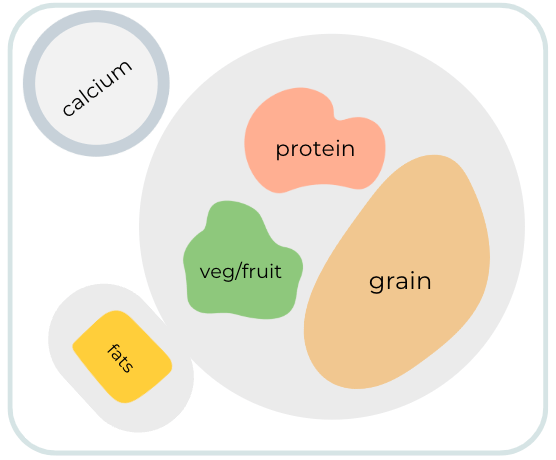
- 50% grains and starches for energy (pasta, rice, bread, potatoes)
- 25% protein to support muscle growth and development (chicken, fish, tofu, eggs, yogurt)
- 25% fruits and vegetables for fibre, vitamins and minerals (salad, steamed vegetables, or fruit on the side)
- Plus added fats and dairy for brain health and hormone balance (avocado, olive oil, cheese, nuts)
Example: Build-your-own burrito bowl:
- Rice or quinoa (grains/starches)
- Grilled chicken or black beans (protein)
- Toppings: corn, tomatoes, lettuce, peppers, and salsa (vegetables)
- Shredded cheese, avocado, sour cream (added fats and dairy)
- Optional: a handful of tortilla chips (fun foods)
This example of a meal gives your body steady energy, supports your growth, and keeps you full and satisfied, without cutting anything out. And it’s also an easy way to share with friends, customize, and enjoy – because food is also about connection.
How to Navigate Social Media More Mindfully
The reality is, social media is a huge part of our daily lives. But what you scroll through every day impacts how you see yourself, your body, and your relationship with food – often without you even realizing it. That is why it’s so important to be intentional with the content you consume.
Here are some strategies you can do to protect your mental health while still enjoying social media:
- Ask yourself: Is this content making me feel better or worse?
- Check the source: Is it a registered health professional or just an influencer trying to sell a product?
- Watch for extremes: Anything that cuts out entire food groups or promises “quick fixes” is a red flag
- Know your worth: Your health, your happiness, and your worth are not defined by your body size or a number on the scale
Consider taking social media breaks or curating your feed:
- Unfollow accounts that make you feel bad or trigger comparison
- Follow creators who promote mental health, body positivity, and balance
- Set time limits to avoid endless scrolling – swap screen time for activities that make you feel good like music, art, or hanging out with your friends
Choose content that supports your mental health, your confidence, and your well-being – because you are worth it.
Supporting Ourselves and Others
As friends, siblings, teammates, and classmates, we can:
- Avoid diet talk and body-based compliments
- Plan hangouts that aren’t about “earning” food or burning calories
- Compliment people for who they are – not how they look
It’s very important to create spaces where everyone feels safe to show up as themselves – no matter their size, shape, or identity. If you notice a friend struggling, check in with them without judgment. Remind them that they’re valued for who they are, not what they look like or what they eat. Together, we can help shift the conversation away from appearance and toward connection, kindness, and supporting each other’s mental and physical well-being.
You Are More Than What You Eat or How You Look
At the end of the day, you are so much more than your body or your food choices. You are unique, capable, and worthy — exactly as you are.
If you’re struggling with food, body image, or just need someone to talk to — there is help.
Our team at Change Creates Change is here to help you navigate food, body image, and social media pressures. Book a free consultation today.