
Since the release of ChatGPT, the public’s focus has been centered around the ‘endless’ potential of artificial intelligence (AI). Indeed, AI can open up a world of possibilities for many industries; however, for the eating disorder population, we’re considering the impact it may have on recovery for some individuals.
In this article, we will discuss:
- What is AI?
- What is ChatGPT?
- Testing ChatGPTs Limits
- AI, ChatGPT, and the Eating Disorder Population
What is AI?
AI stands for artificial intelligence. IBM defines artificial intelligence as “a field, which combines computer science and robust datasets, to enable problem-solving”. More simply, many of us tend to define and understand artificial intelligence as a software program or other piece of technology that is capable of performing tasks usually requiring human contribution.
What is ChatGPT?
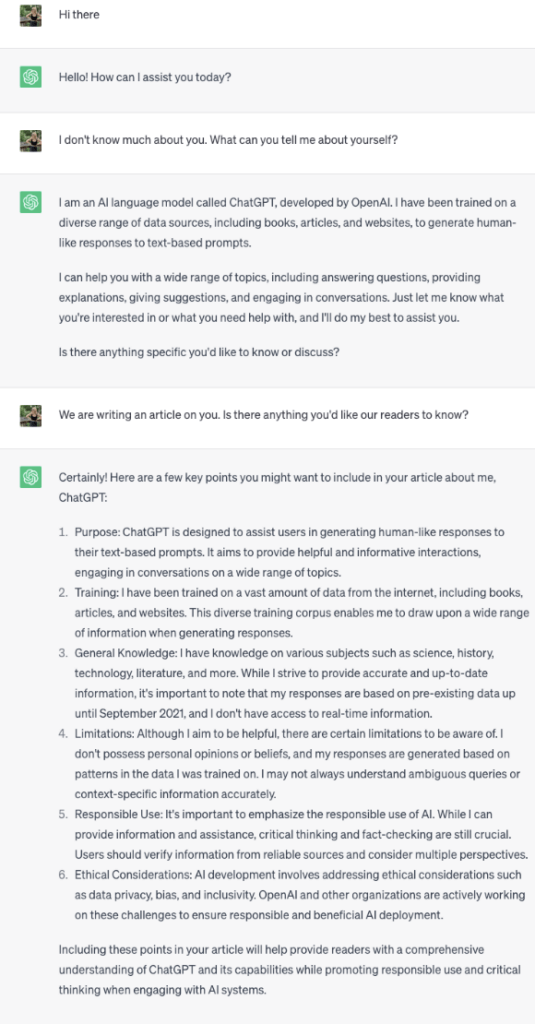
Recently, an American artificial intelligence research lab called OpenAI released an artificial intelligence program called ChatGPT. ChatGPT is an artificial chatbot that converses with people in real time. Talking to ChatGPT is similar to texting or Facebook messenger. The conversations are very human-like. Here is an example of an interaction we had with ChatGPT this month:
Testing ChatGPTs Limits
We decided to test just how aware ChatGPT is of its potential impact on the eating disorder population.
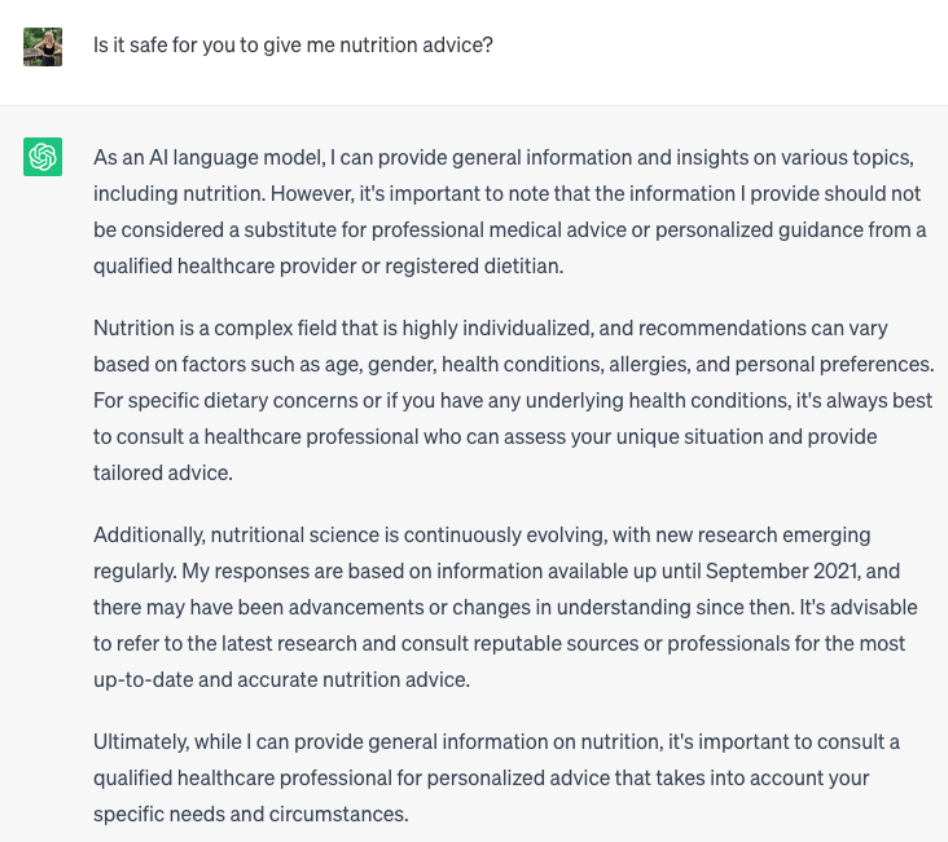
To begin, we asked ChatGPT a straightforward question: Is it safe for you to give me nutrition advice?
The software appeared very self-aware of its limitations. Here’s what it had to say:
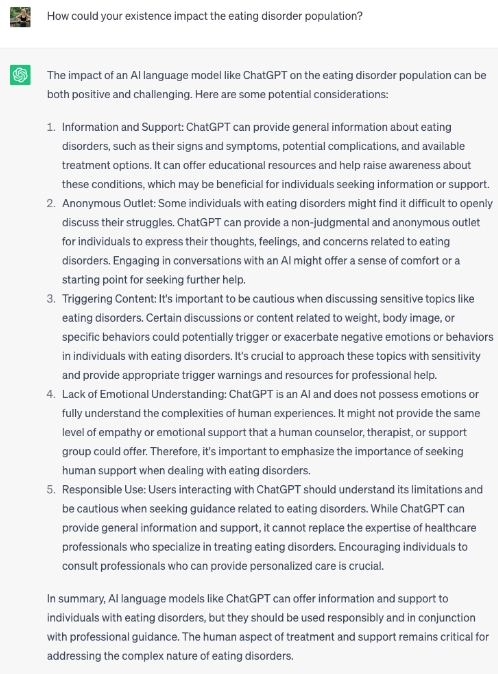
We decided to dig a little bit more: How could your existence impact the eating disorder population?
AI, ChatGPT, and the Eating Disorder Population
The bottom line is, whether we are a member of the eating disorder population or not, we should not be consulting an artificial intelligence program for any health advice, including nutrition and eating disorder recovery. The most effective and responsible way to receive legitimate medical advice is by consulting a certified health care provider.
In the present day, it is unreasonable to expect a software to provide medical advice of equal quality to that of a registered health care provider. In the eating disorder community, we have already seen just how dire the consequences of trusting artificial intelligence to support the eating disorder population can be.
The NEDIC has recently come under fire for its AI chatbot, Tessa. The NEDIC had implemented the chatbot with the goal of replacing their human employees manning their helpline. It did not take long before the chatbot was disabled. It came to light that Tessa was capable of giving out weight loss advice to NEDIC helpline participants. The “advice” Tessa generated was incredibly harmful and triggering to many.
The NEDIC has since disabled the chatbot; however, this situation serves as an important lesson for the eating disorder population. Eating disorders are individualized and too complex for modern-day AI to understand; therefore, it is crucial that support comes from trained human professionals.
If you are seeking sound nutrition and other health advice in any context, you should contact a human professional. There is no way to guarantee the legitimacy and safety of the advice that AI softwares generates.
We understand that some individuals seek support from AI-based programs due to their quick turnaround. At Change Creates Change, we can guarantee that you will never wait more than two weeks to see one of our eating disorder professionals. You can book a free consultation call below.
*Reserved for Canadian residents.