The Covid-19 pandemic has created a global sensation of anxiety, fear, and stress. In a world where we are encouraged to spend our time indoors and at a safe distance from our loved ones, it comes to no surprise that we are seeing an uptick in eating disorders in Canada. Let’s talk about the impact of the pandemic, and how to find a sense of comfort through the 8 Routes of Safety.
Watch The Video Here!
Collective Trauma
In our lives, we all experience stress and hardships. In a world before Covid-19, we were encouraged to turn towards our support systems, rely on others, and ask for help. The tricky part about Covid-19 is that we are all experiencing this trauma together. This is what is referred to as a collective trauma.
Collective trauma means that as we are all struggling as individuals, as a society we are struggling as a whole. In past times of trauma or stress, we often turned to spending time with our loved ones, or reaching out for help from an expert to feel safe and secure. The problem is that with Covid-19, the people that we would normally turn to are also going through the same stress. Because we are all going through the trauma at the same time, we simply do not have the same amount of energy, time, or capacity to support those around us.
This is a problem – we all need support, especially for both the parent and the child when the child is living with an eating disorder. We can find this support through our routes of safety. This is a concept developed by Jake Ernst, MSW, RSW. In a previous post, we talked about finding how to find your Window of Tolerance in times of stress. Using your window of tolerance is a great way to find a place where you feel neutral and at rest.
Routes of Safety
Jake Ernst’s concept of Routes of Safety circle around the idea of how we find safety, reduce our anxiety, and find a sense of calm. In his concept, he lays out 8 different routes of safety. Let’s discuss these below:
- Inner Guidance
- Structure & Certainty
- Sensory Experiences
- Quality Relationships
- Protective Measures
- Closeness & Proximity
- Private Retreat
- Common Humanity
Covid-19 & The Routes of Safety
Due to the safety restrictions that come with the Covid-19 pandemic, we are encouraging folx to turn inwards and find those self-centred, or self-oriented, routes of safety.
1. Structure and Certainty & Quality Relationships
This means that we cannot turn towards Structure & Certainty, because we are living in a world that is quite chaotic and very uncertain at times. It also means that Quality Relationships are very difficult to maintain and access. Our support people simply don’t have the extra time, energy, and capacity to connect virtually. With Zoom-fatigue, one extra virtual call may not give us a feeling of safety and connection that we are looking for.
2. Protective Measures
Another Route of Safety that Jake talks about is Protective Measures. This is the security that we find is survival, security, or protection. Again, this is very difficult to access during the Covid-19 pandemic when we struggle to feel safe, secure, or protected.

3. Private Retreat
Private Retreat is a route of safety that involves increasing the distance between yourself and others. In the pandemic, we are spending a lot of time by ourselves in social isolation. Most of us spend the majority of our time in our privacy or alone. While this may have been a way to find safety in the past, during Covid-19 it may be quite stressful.
4. Closeness & Proximity
Closeness & Proximity involves decreasing the distance between yourself and others. For the majority of the pandemic, we have been encouraged to keep a safe distance from anyone that does not live in our immediate household. Under normal times, we may have turned toward our friends or extended family members to feel safe and assured, and now that may not be possible to access.
5. Common Humanity
The Common Humanity Route of Safety is the belief that safety and reassurance can come from our shared human experiences. As we talked about before regarding collective trauma, we are all going through this pandemic. As it has been said, we are all in the same storm but we may have different boats. That is, we are all living in the Covid-19 pandemic, but we all have different resources and realities.
Inner Routes of Safety
Amongst Covid-19, there are four that we really want you to hear and learn how to access. These are the more self-oriented, or inner routes of safety. When you and your child learn how to practice these routes of safety, it may be easier to access those feelings of safety and security. The four we will be discussing are Inner Guidance, Sensory Experiences, Common Humanity, and Private Retreat. The latter two, common humanity and private retreat, will come with a caveat.
1. Inner Guidance
Jake describes inner guidance as “using resources within oneself as a pathway to access and secure safety”. We can use activities and exercise that we can do on our own, such as journaling or meditation. In these moments, we are trying to cultivate a sense of safety from within.
2. Sensory Experiences
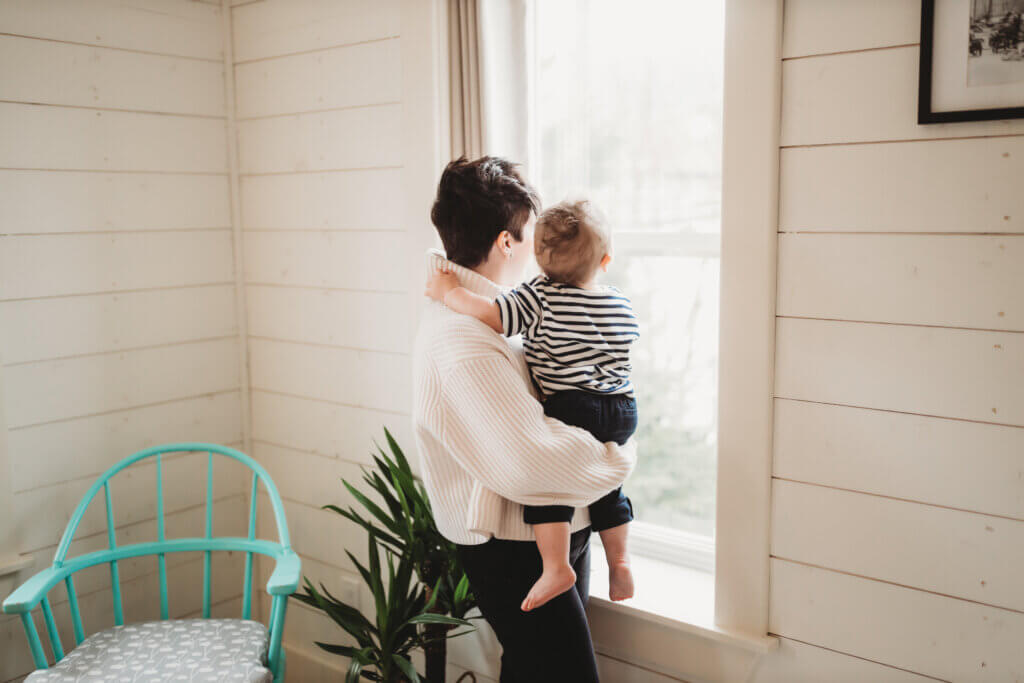
This is just as it sounds, using our sensory (smelling, hearing, seeing, tasting, touching) systems to feel safe. At Change Creates Change, we often use this as a grounding tool. This can be lighting a candle, going for a warm bath, or going for a leisurely walk around the neighbourhood. We will talk more about grounding tools in an upcoming post!
3. Common Humanity
As we talked about above, common humanity is finding safety in a shared human experience. With the pandemic, we are all affected and going through the events together. This can give us a feeling of being seen and heard, feeling validated, and accepting being vulnerable. It also means that we are able to have these feelings be reciprocated through friends, family, or other support systems.
4. Private Retreat
During the pandemic, we are encouraging folks to tread lightly when using private retreat to find a sense of safety. As we talked about above, many of us are spending so much time in private retreat to begin with. However, even in our homes we can feel uneasy or a sense of chaos. Private retreat can be used to take time away from other family members or roommates to spend time alone. This may look like spending an hour in your room to read a book, or going for a drive by yourself with a cup of tea.
At Change Creates Change, we often hear parents of children with an eating disorder describe feeling burnt out, tired, and stuck. Our expert team of dietitian nutritionists and therapists believe in sharing tools to help parents feel empowered to fight the eating disorder. If you would like to learn more about how we work with parents and children living with eating disorders, sign up for our free, on-demand webinar below.